Aerospace
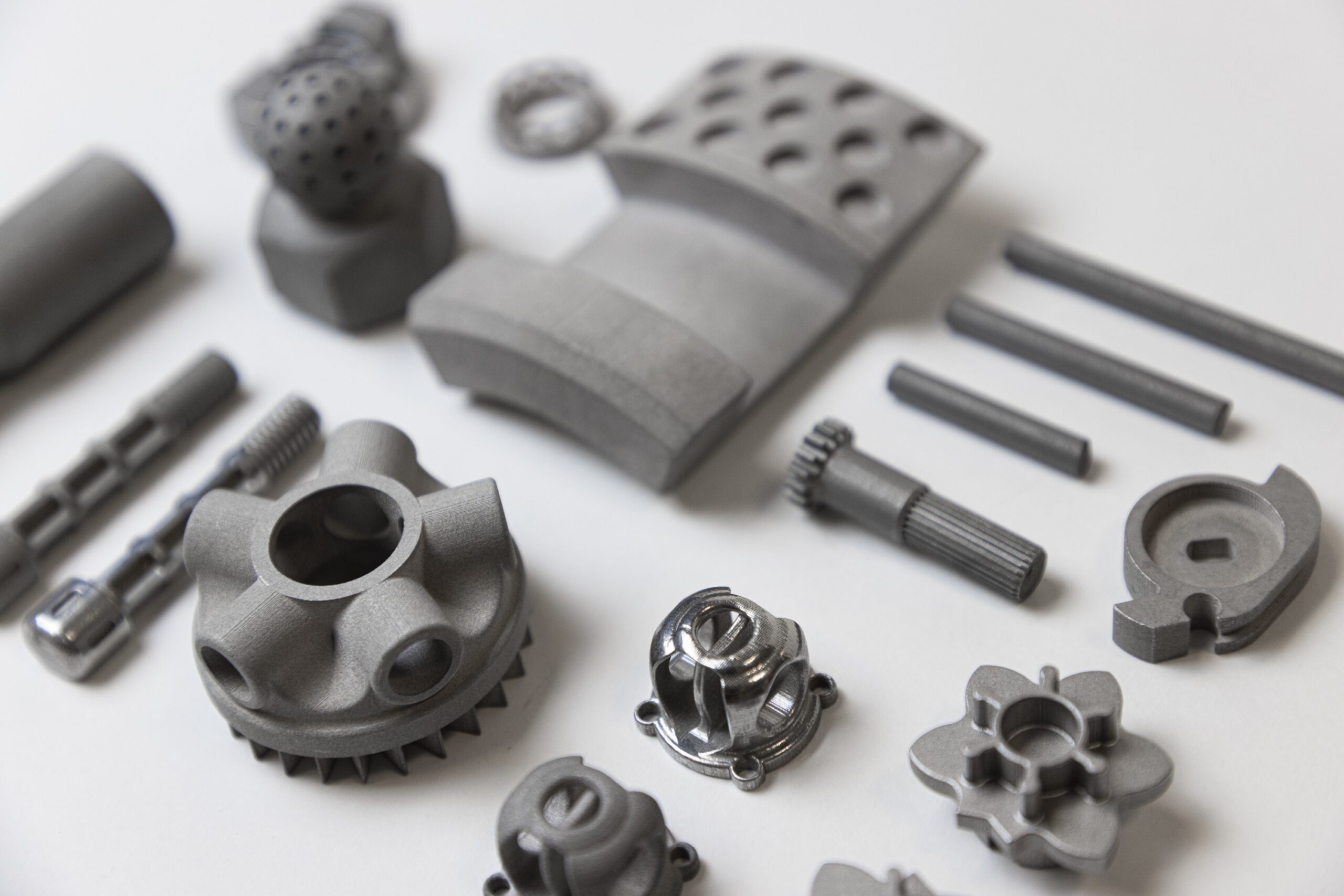
Additive manufacturing and metrology are changing the way airplanes are designed, produced and supported. Our solutions for aerospace include industrial grade equipment and service capabilities that are specifically engineered for the demands of the aerospace industry. They are certified and proven, allowing you to easily integrate them for product development, manufacturing, MRO and reorganizing your supply chain.
Includes applications such as:
| Product Development Manufacturing Tooling Composite Tooling Jigs and Fixtures Production of Drones |
End-Use Parts MRO Inspection Reverse Engineering |
Key Benefit
- Consolidate supply chains, and produce low-volume parts on demand
- Create complex and lightweight parts, tools and components in aerospace grade materials
- Perform quick, on-site inspection and MRO
Our Solution
- Industry leading production 3D printers (metals, polymers and thermoplastics)
- Full service, ISO 9001 certified 3D printing, design, and 3D scanning facility
- Portable handheld 3D scanners, with dent inspection software
Delivering Value
- Shorten traditionally long product development cycles
- Reorganize supply chains to be more responsive and consolidate parts
- Produce aerospace interiors with certified 3D printing materials
Automotive
Design the next generation of ground transportation and make manufacturing more agile and efficient by leveraging the design freedom of additive manufacturing and metrology. Automotive manufacturers around the world are implementing industrial 3D printing and 3D scanning technology across their product development lifecycle, from design through to rapid prototyping, testing, manufacturing tooling, and final assembly. It creates opportunities to improve production efficiency and create vehicles that are faster and lighter with much better performance.
Includes applications such as:
| Product Development Manufacturing Tooling Composite Tooling Jigs and Fixtures |
End-Use Parts MRO Inspection Reverse Engineering |
Key Benefits
- Transform supply chains to be responsive and agile
- Create complex and lightweight parts, tools and components in production materials
- Perform quick, on-site functional testing and produce low-volume parts on demand
Our Solutions
- IIndustry leading production 3D printers (metals, polymers and thermoplastics)
- Full service, ISO 9001 certified 3D printing, design, and 3D scanning facility
- Portable handheld 3D scanners for arm-free inspection and reverse engineering
Delivering Value
- Mitigate manufacturing risk and supply chain constraints
- Create vehicles that define categories
- Enable innovation across the organization
Manufacturing
Industry 4.0 is here and it is no longer sustainable to be manufacturing solely with traditional technology. Through thinking differently about bringing products to market, and adopting new design principles, additive manufacturing, and metrology you can transform your manufacturing process to be more competitive than ever before. Remove the complexity of final assembly, shave weeks off production cycles, reduce costs, and streamline your workflow to be more scalable and adaptable
Includes applications such as:
| Product Development Manufacturing Tooling Composite Tooling Jigs and Fixtures |
End-Use Parts MRO Inspection Reverse Engineering |
Key Benefits
- Transform supply chains to be response and agile
- Create complex and lightweight parts, tools and components in production materials
- Perform quick, on-site functional testing and produce low-volume parts on demand
Our Solutions
- Industry leading production 3D printers (metals, polymers and thermoplastics)
- Full service, ISO 9001 certified 3D printing, design, and 3D scanning facility
- Portable handheld 3D scanners for arm-free inspection and reverse engineering
Delivering Value
- Mitigate manufacturing risk and supply chain constraints
- Create vehicles that define categories
- Enable innovation across the organization
Education
Many of the students of today will enter into a world of jobs and opportunity that don’t even exist yet. Prepare them for the unknown by focusing on the skills and creativity essential for entrepreneurship and STEAM based career paths. With 3D printing incorporated into the classroom, students have an engaging platform from which they can tackle all sorts of real-world problems and challenges all while developing critical thinking and design fundamentals. Create tangible and visual learning experiences for math, physics, science and the arts, or bolster your abilities to perform world-class research.
Includes applications such as:
| STEAM (Science, Technology, Engineering, Art and Math) based learning Critical Thinking and Problem Solving Research and Development for Post Secondary Institutions Concept Development |
Functional Prototyping Data Capture and Digitization Inspection Reverse Engineering |
Key Benefits
- Prepare students for future STEAM jobs
- Build critical thinking skills and encourage creativity
- Enhance research capabilities and outcomes
Our Solutions
- Desktop 3D printers and labs designed for the classroom
- Educational resources, lesson plans, and curriculum
- Handheld 3D scanners for quick and accurate reverse engineering
Delivering Value
- Solutions that meet even the toughest health and safety standards
- Low operating costs so 3D printing and 3D scanning can be accessible to all students
- World class support and educational resources
Consumer Products
In the lighting fast world of consumer products you have to iterate fast and bring products to market faster. Our professional 3D printing and 3D scanning solutions let you shorten your product development cycles and go from design, to rapid prototyping to manufacturing without skipping a beat. Our world class multi-material, full colour 3D printing technology lets you accurately mimic the aesthetics, performance and measurements of the products you are creating for prototyping purposes, or allow you the opportunity to benefit from low-volume manufacturing. If you are designing the next generation of consumer products, work with our team to get them to your customers faster than ever before.
Includes applications such as:
| Concept Modeling Functional Prototyping and Testing Rapid Prototyping and Product Development Injection Molding |
Low-Volume Manufacturing Finishing Inspection Reverse Engineering |
Key Benefits
- Shorten product development cycles
- Iterate more and reduce design development time
- Mimic materials and aesthetics down to the micron
Our Solution
- Multi-material, full colour 3D printing with voxel level control
- Full service, ISO 9001 certified 3D printing, design, and 3D scanning facility
- High precision scanners for reverse engineering and inspection
Delivering Value
- Get your world class products to market fast and beat out the competition
- Avoid tooling with low-volume manufacturing
- Offer highly customized and complex products with enhanced functionality
Medical
Delivering customized and personal patient care on a large scale can be made possible with advanced 3D printing and 3D scanning technology. In hospitals, 3D technology is enabling physicians to accelerate medical processes and improve surgical success with unique approaches to complex situations. For medical device manufacturers, 3D printing offers a platform to produce devices that are custom to specific patient anatomy. All throughout healthcare our additive solutions are reducing risk, improving success rates and increasing efficiency.
Including applications such as:
| Preclinical Testing for Medical Devices Clinical Training Models Medical Device Manufacturing Rapid Prototyping |
Low-Volume Manufacturing Surgical Planning Models Custom Orthotics and Prosthetics Body Digitization |
Key Benefits
- Accelerate time to verification and validation of medical devices
- Improve clinical outcomes and increase efficiency using models based on patient anatomy
- Work with biocompatible materials and technology approved for medical use
Our Solutions
- Biocompatible materials approved for a variety of applications
- Full service, ISO 9001 certified 3D printing, design, and 3D scanning facility
- Medical grade and highly accurate 3D printers and 3D scanners
Delivering Value
- Increase patient understanding of procedures and optimize surgical outcomes
- Improve medical device design and accelerate development
- Reduce complication rates and lower the cost of care
Dental
In an industry where precision, accuracy, and a more streamlined workflow are critical, our resin or metal 3D printers offer dentists, dental laboratories, and dental manufacturers the ability to work faster and more cost-effectively through a more predictable and customized workflow. Our line-up of industry-leading dental 3D printers will transform the way you produce crown and bridge models, orthodontic applications like clear aligners, implant models, surgical guides, cast partials and visual aids.
Including applications such as:
| Crown and Bridge Dianostic Wax-up Indirect Bonding Trays Clear Aligners Orthodontic Appliances |
Implant Models with Soft Tissue Surgical Guides Cast Partials Denture Try-ins |
Key Benefits
- Fast and efficient production of dental models at a lower cost
- A complete digital workflow in-house
- Improved profitability and efficiency
Our Solutions
- Dental-specific materials and solutions
- Resin and metal 3D dental 3D printers from industry-leading manufacturers
- Robust dental milling machines from imes-icore® or vhf®
Delivering Value
- Automation improves workflow and productivity
- Digital process reduces labor and overhead costs
- Shorter turnaround times for your customers