
Revolutionizing Eyewear: How Additive Manufacturing is Redefining Design and Production
The eyewear industry is undergoing its most significant transformation since the invention of the hinge. For decades, manufacturers were limited by the constraints of injection molding and subtractive CNC milling—processes that required expensive tooling, long lead times, and resulted in significant material waste.
Today, 3D printing (additive manufacturing) has moved beyond the prototyping phase. It is now a primary production method for end-use glasses, offering a level of customization, sustainability, and design freedom that was previously impossible.
Why 3D Printing is the New Standard for Eyewear?
The shift from traditional manufacturing to additive processes is driven by four key advantages:
1. Bespoke Customization and Personalization
Traditional glasses follow a “one size fits most” philosophy. With 3D printing, the frame can be built around the user. By utilizing 3D facial scanning, designers can adjust bridge widths, temple lengths, and pantoscopic tilts to create frames that fit an individual’s unique facial geometry perfectly.
2. Unprecedented Design Freedom
Additive manufacturing allows for “unmoldable” geometries. Designers can now incorporate:
Intricate Lattice Structures: Reducing weight while maintaining strength.
Monolithic Hinges: “Print-in-place” mechanisms that eliminate the need for screws.
Internal Channels: For specialized smart-glass electronics or lightweighting.
3. Sustainability and Zero-Waste Production
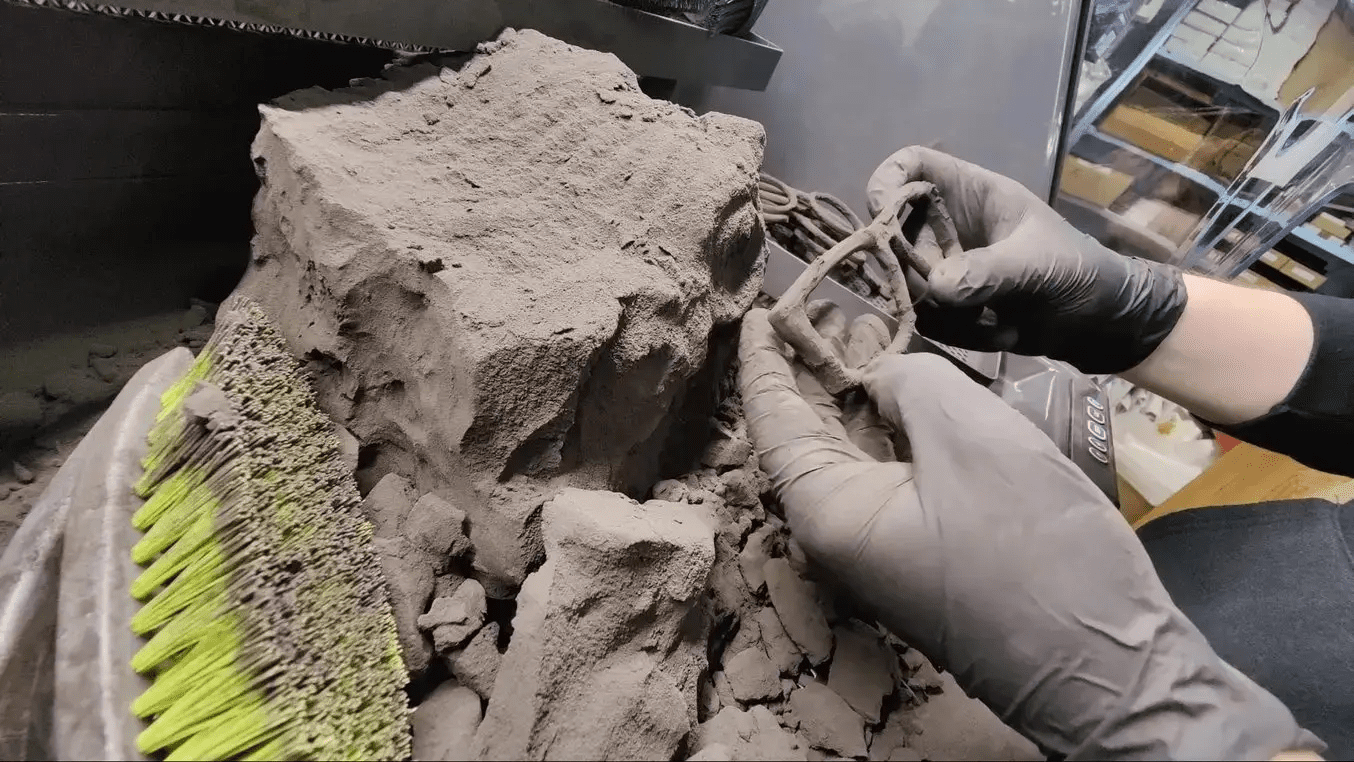
Traditional acetate frames are often cut from large sheets, with up to 80% of the material ending up as waste. In contrast, SLS (Selective Laser Sintering) 3D printing is an additive process. Unused powder can be recycled for the next build, making it a “near-zero-waste” manufacturing method that aligns with modern ESG goals.
4. Agile Supply Chains and On-Demand Production
By eliminating the need for expensive molds, eyewear brands can launch “micro-collections” and test market trends without the risk of unsold inventory. If a design becomes popular, production can be scaled instantly across a digital manufacturing network.
The Technologies Powering the Change
To achieve retail-quality eyewear, two primary 3D printing technologies dominate the landscape:
- Selective Laser Sintering (SLS)
- SLS is the gold standard for end-use eyewear. Using a laser to fuse polymer powder, it creates parts with excellent mechanical properties.
- Key Materials: Nylon 11 and Nylon 12. These materials are biocompatible, lightweight, and offer the “memory” needed for opticians to heat and adjust frames for a perfect fit.
- The Benefit: No support structures are required, allowing for complex, interlocking parts and high-density production runs.
- SLA (Stereolithography)
- uses a UV laser to cure liquid resin into high-resolution parts.
- The Benefit: It is ideal for high-fidelity prototyping and creating transparent or “crystal” frames that mimic high-end acetate.
From Raw Print to Luxury Product: Post-Processing
A 3D printed frame is only as good as its finish. Modern post-processing techniques have bridged the gap between a “printed part” and a “consumer product”:
- Vapor Smoothing: A chemical process that seals the surface of the print, resulting in a smooth, injection-molded look and feel.
- Vibro-Polishing: Using ceramic media to buff frames to a high shine.
- Dyeing and Coating: SLS parts can be dyed in a vast spectrum of colors or coated with specialized finishes (like Cerakote) for enhanced UV resistance and durability.
- The Future: A Digital Eyewear Ecosystem
Proto3000 is at the forefront of this revolution, providing the hardware, materials, and expertise to help eyewear brands transition from traditional manufacturing to a digital-first approach.
Ready to revolutionize your eyewear production?