
Understanding Metal AM: SLM vs. DMLS

While the industry often uses the term DMLS (Direct Metal Laser Sintering) as a catch-all for metal 3D printing, our facility utilizes advanced SLM (Selective Laser Melting) technology. Though the mechanical process of a laser fusing metal powder remains the same, the metallurgical outcome is a significant step forward for industrial manufacturing.

  • DMLS (Sintering): Historically refers to heating metal powder to a point where particles fuse at a molecular level without reaching a full liquid state.
  • SLM (Melting): Our process achieves a full liquid melt pool, ensuring the metal powder is completely liquefied before solidifying.

get a quote


Proto3000-Icon_Process_DLPWhy We Prioritize SLM for Our Clients

By transitioning our core service focus to Selective Laser Melting, Proto3000 provides our North American partners with:


  • Full Part Density: SLM produces parts with 99.9% density, mirroring the structural integrity of wrought or cast metals.
  • Superior Mechanical Properties: Increased tensile strength and fatigue resistance, essential for heavy-industry applications.
  • Isotropic Material Integrity: Homogeneous microstructures that allow for predictable performance under high-stress environments.

Note to Engineers: If your project specifications call for “DMLS,” our SLM process meets and typically exceeds those requirements by providing a fully melted, high-performance end-use part.

Applications & Metal Alloys

Metals & Alloys

  • Steel & Stainless Steel
  • Titanium Pure & Alloys
  • Aluminum Alloys
  • Nickel-Based Alloys
  • Cobalt Chrome Alloys
  • Copper-Based Alloys

Applications

  • Fully Functional Prototypes
  • Production Tools
  • Mold and Insert Tooling
  • Rigid Housing
  • Ductwork
  • Spare Parts
  • Heat Exchangers & Heatsinks

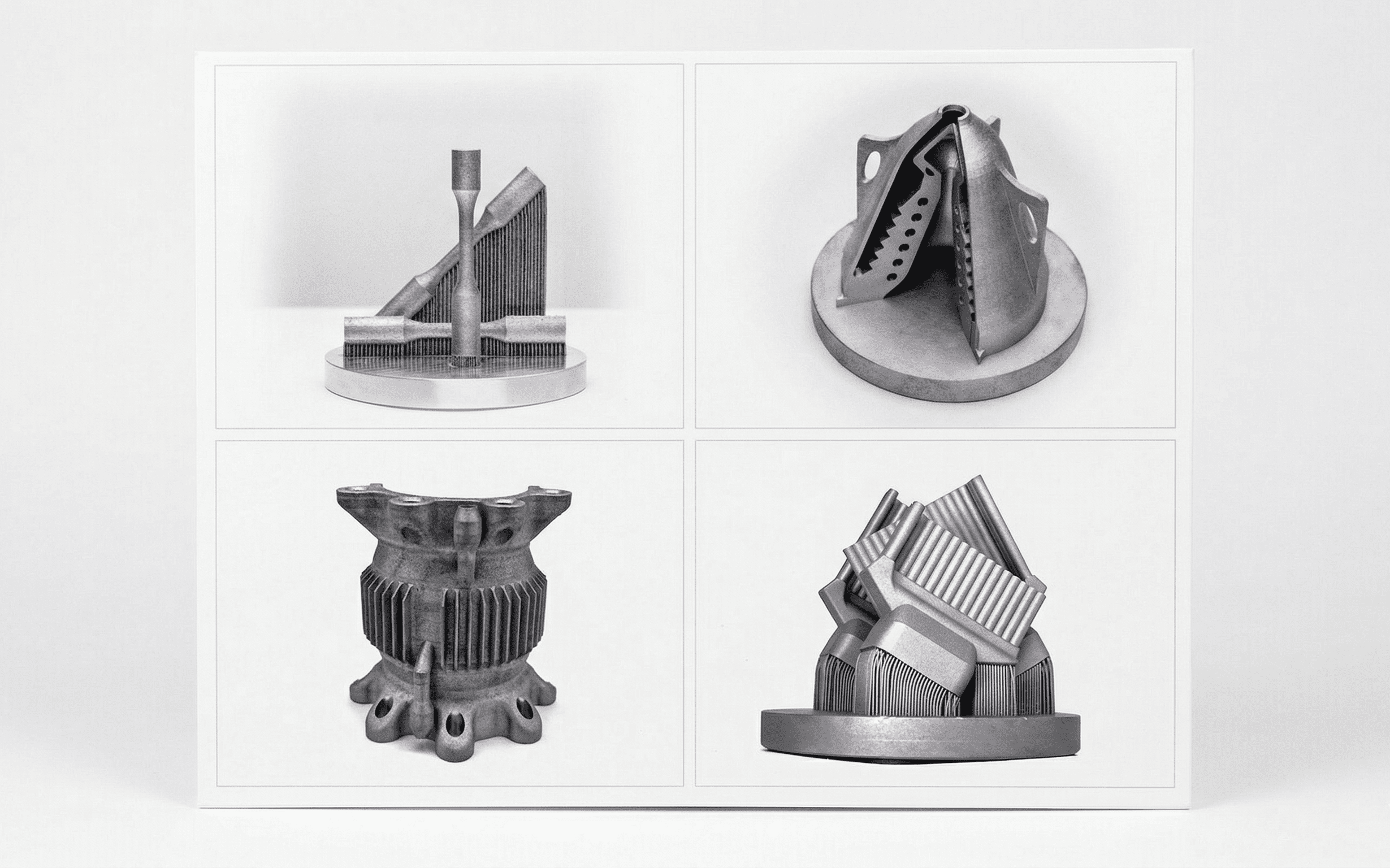
A collage of metal 3d printed parts

Advantages 

3D printed parts with SLM technology are durable, lightweight and precisely detailed.

  • Print complex geometries with strong and durable components
  • Rapid prototyping with high quality and high accuracy- ideal for functional testing
  • Create complex shapes, intricate details and delicate features
  • Reduce cost & development time by consolidating parts, no tooling required
  • Build parts in a matter of hours

Common Materials

Aluminum (AlSi10Mg)
Stainless Steel 17-4PH
Stainless Steel 316L
Titanium (Ti64 ELI)
Inconel 718
Mold Steel 1.2709