
$! SLS – Proto3000
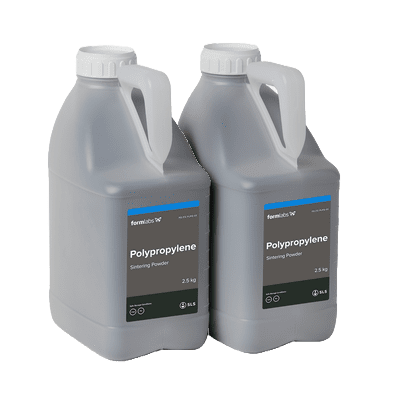
Image shows 2 bottles of Polypropylene SLS Powder from Formlabs

Formlabs® Polypropylene Powder

Formlabs® Polypropylene Powder

Accelerate your time to market and reduce costs by manufacturing prototypes and durable end-use parts that are chemically resistant, weldable, and watertight with a simplified workflow in-house using SLS 3D printing with Formlabs’ Polypropylene Powder on the FUSE 1+ 30W.

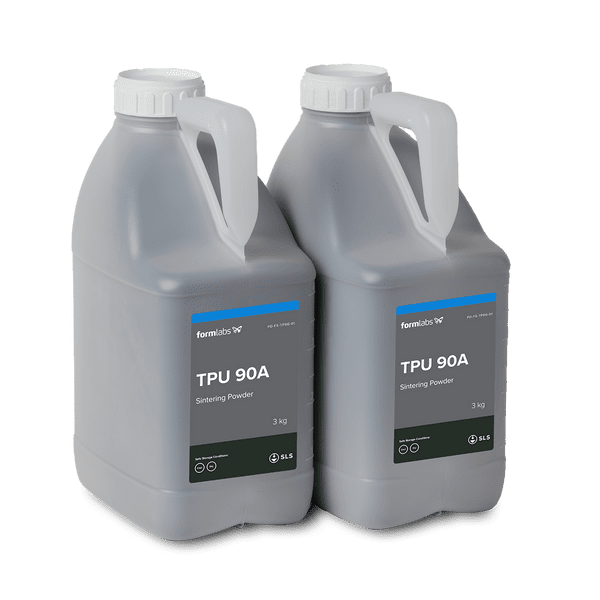
Image shows bottles of TPU 90A SLS powder

Formlabs® TPU 90A Powder

Formlabs® TPU 90A Powder

TPU 90A powder has an exceptional strength and flexibility to produce fully functional and durable SLS 3D printed parts in-house. Its high elongation and superior tear strength allow you to produce a myriad of functional prototypes, end-use parts and even medical devices or prosthetics that withstand the demands of daily usage. Formlabs’ TPU 90A is a biocompatible 3D printing material.

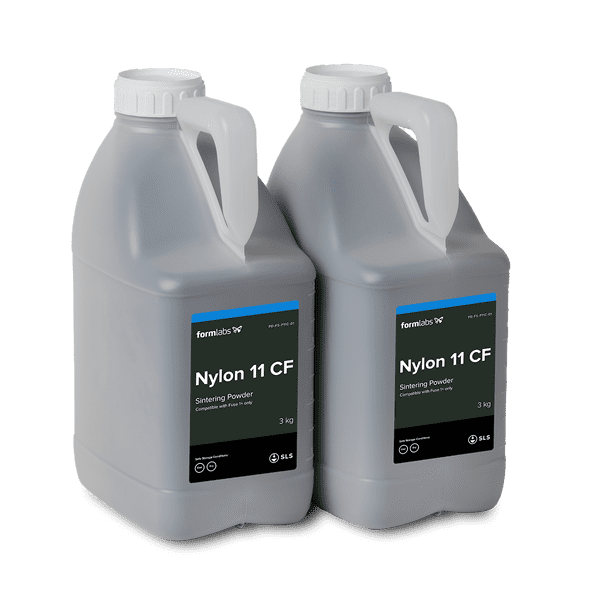
Image shows bottles of Nylon 11 CF powder from Formlabs

Formlabs® 11 CF | Carbon-Fiber

Formlabs® 11 CF | Carbon-Fiber

Choose Nylon 11 CF Powder to produce lightweight, rigid parts that remain structurally and thermally stable and can sustain repeated impact. Get the best of nylon and carbon fiber all in one high-performance material, perfect for end-use applications that require both superior stiffness and strength.
This material requires Sift 300 Sieve to be used with Fuse Sift.

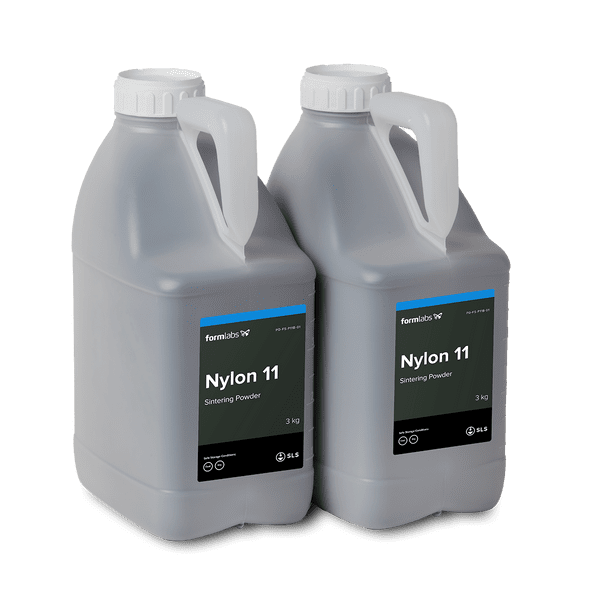
Image shows Formlabs bottles with Nylon 11 SLS 3D printing powder

Formlabs® Nylon 11

Formlabs® Nylon 11

The Nylon 11 powder from Formlabs is a bio-based nylon material that is suitable for prototyping or low volume production of parts that need to bend or take impact. In order to obtain exceptional results, it is highly recommended to print using the Fuse 1+ 30W and optional inert atmospheric control.

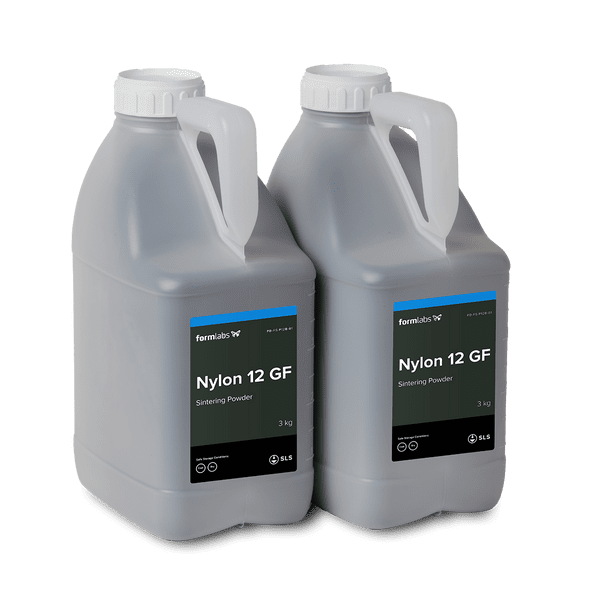
Image shows two bottles of Nylon 12 GF SLS powder from Formlabs

Formlabs® Nylon 12 GF

Formlabs® Nylon 12 GF

Nylon 12 GF Powder for the Formlabs Fuse 1 3D printers is an SLS material for stiff, thermally stable prints that can maintain dimensional accuracy under load. It is ideal for applications where structural rigidity and thermal stability are critical.